
☰


“When the Call Comes, The Path Opens” – My Shikharji Yatra Experience
Updated: May 21, 2025
🎒 30th July 2024 : A 26-Year Wait Ends
Visiting Shikharji was a dream nurtured for 26 years. And when it finally happened, it happened in the most unexpected way. Just five days before the yatra, Jinal - my sister’s friend informed her about two vacant seats. The only challenge – I was working on a project, and sudden 10-day leave was nearly impossible.
But destiny had its own plan. I got to know that I was being released from my project on 31st July and
had no project in hand, which made it possible for my leave to be approved immediately. And on 31st July
itself, I was assigned a new project starting exactly from my return date, which saved me from being on
the bench and getting a bench mark.
If that’s not divine timing, then what is? With blessings and
excitement, we prepared for
the journey.
🚋 30th–31st July : The Beginning & Birthday on Wheels
The yatra began from Junnar with eight friends. We reached Yeola – home to a relative of one of our friends. Celebrated the birthdays which were approaching during the yatra.
Soon after, we headed to the railway station with 11 people (our 8 and 3 from Yeola) and boarded the train. My birthday began on the train itself – surrounded by friends, laughter, and the best Gujarati travel food: thepla, athanu, gathiya. It felt perfect.
🛕 1st August 2024 : Reaching Madhuban
We reached Parasnath railway station in the morning, where our car awaited.
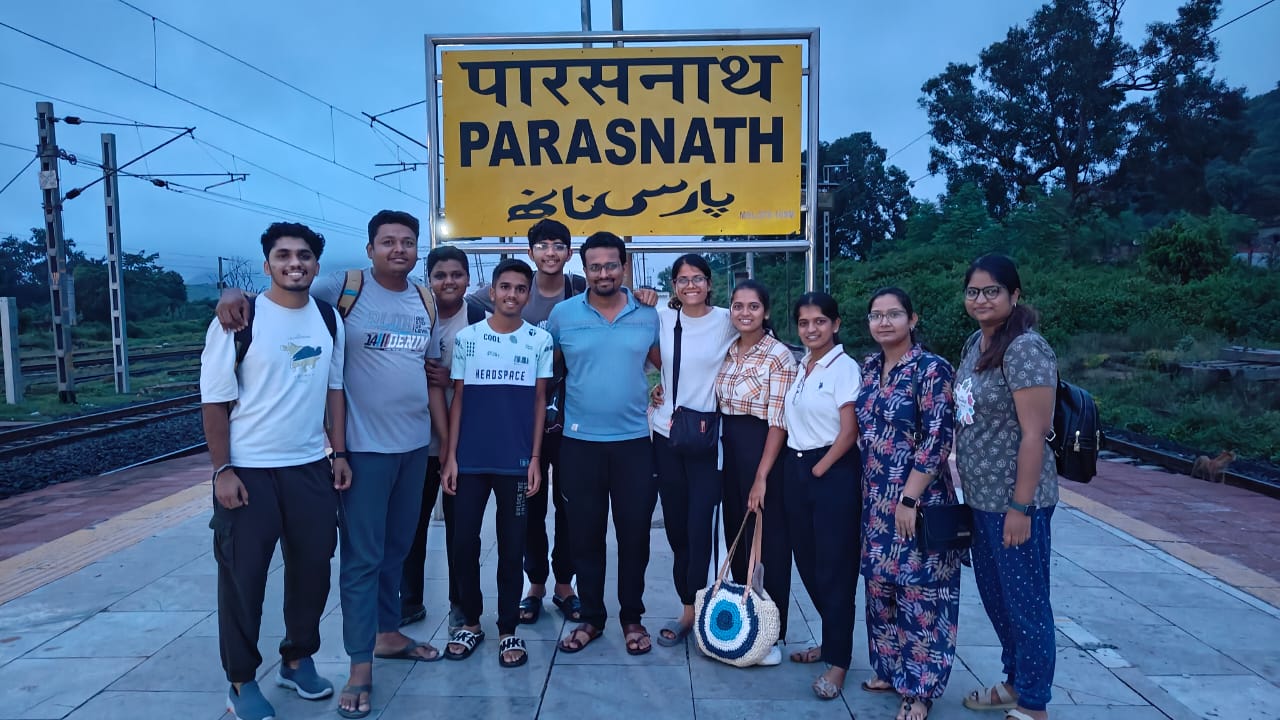
At Madhuban, the village at the foothills of Shikharji, we had breakfast, freshened up for pooja, and started with nine temple darshans. The intricate architecture of the temples was mesmerizing. The day ended with shopping, dinner (chovihar), and early rest – because tomorrow was the big day.
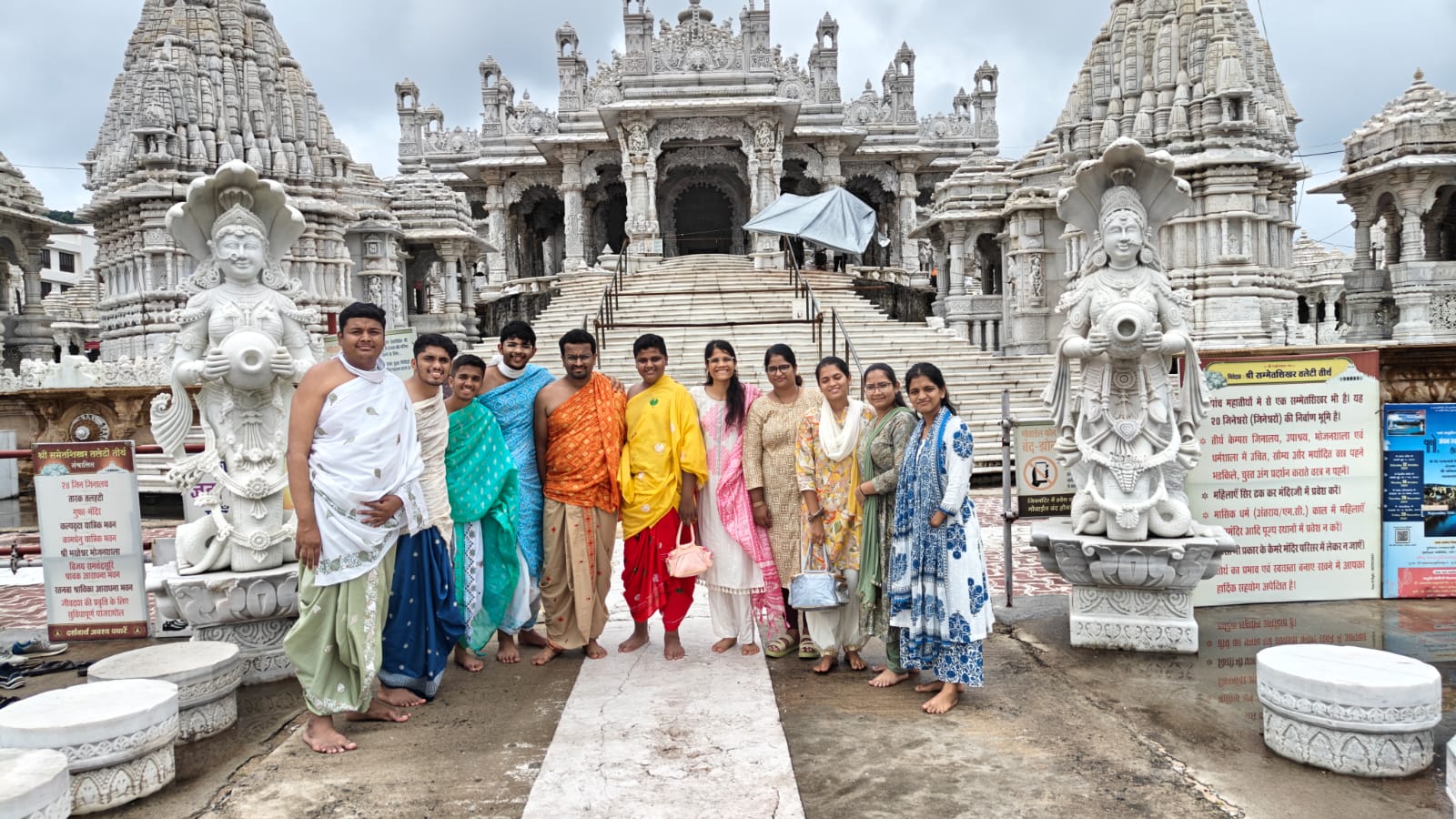
⛰️ 2nd August 2024 : The Climb (35 km in Rain!)
Shikharji, also known as Sammed Shikharji, is Moksha Kshetra of 20 out of 24 Tirthankaras, a Pavan Bhoomi, a place with 31 Tonks
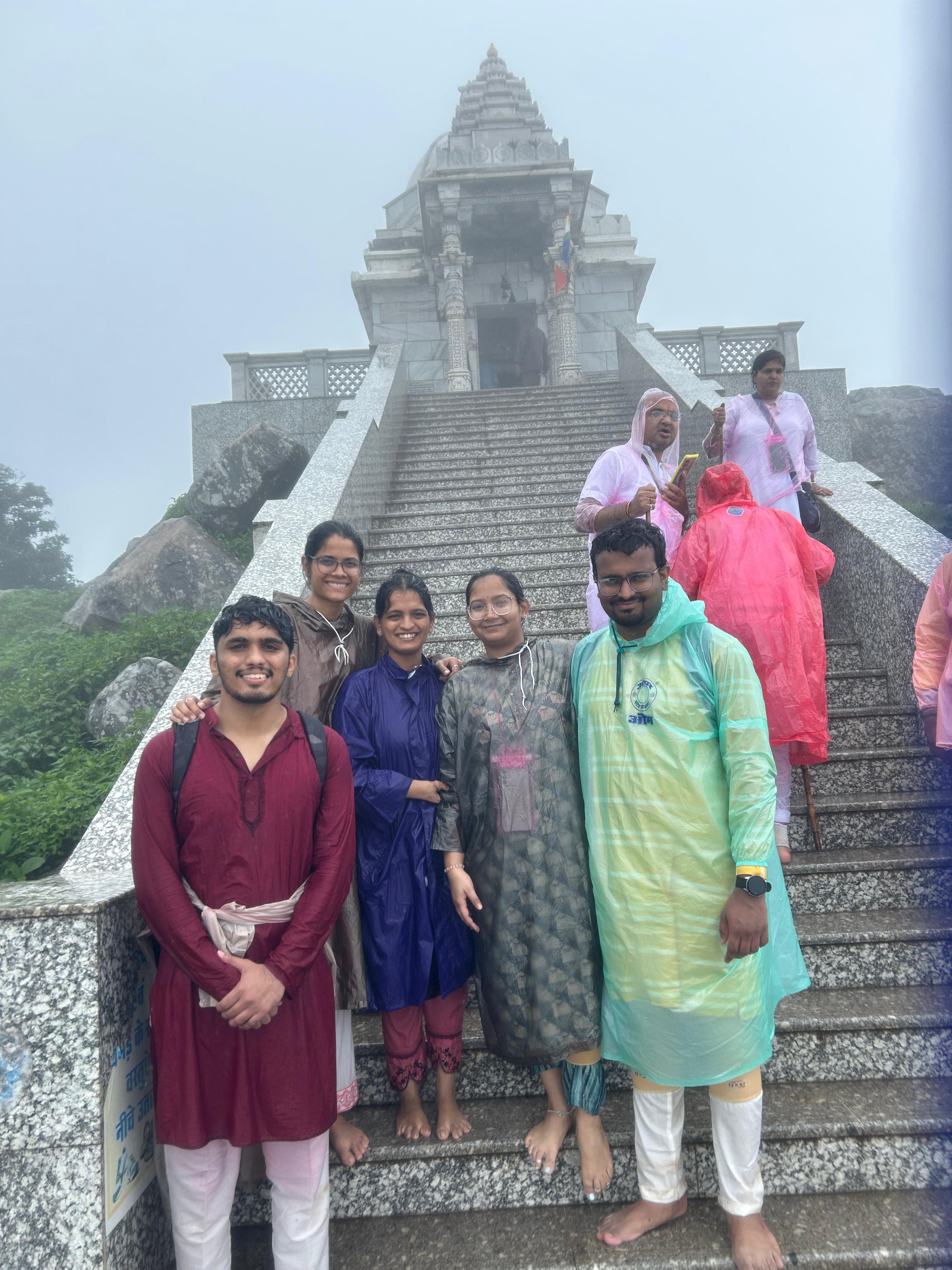
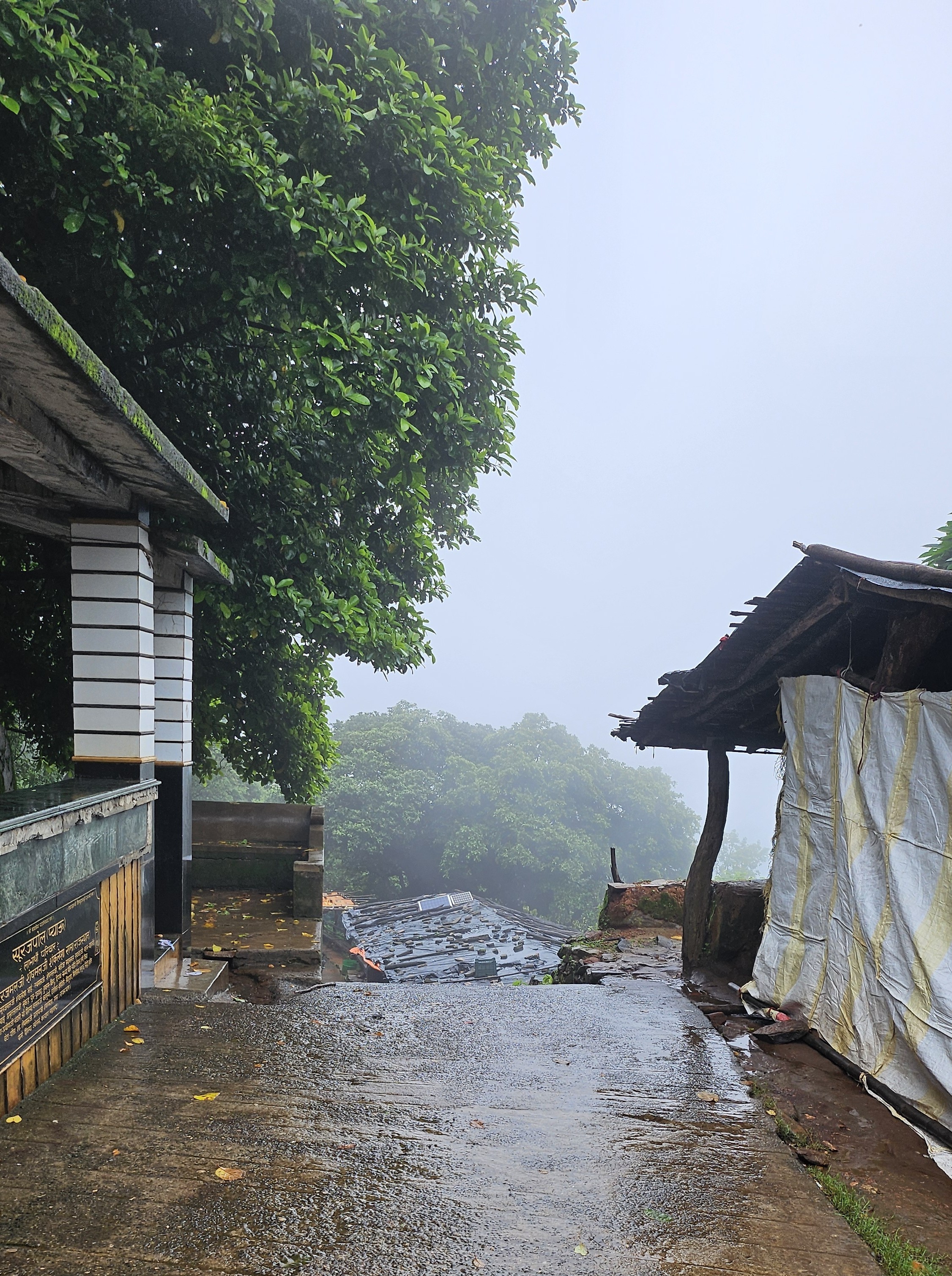
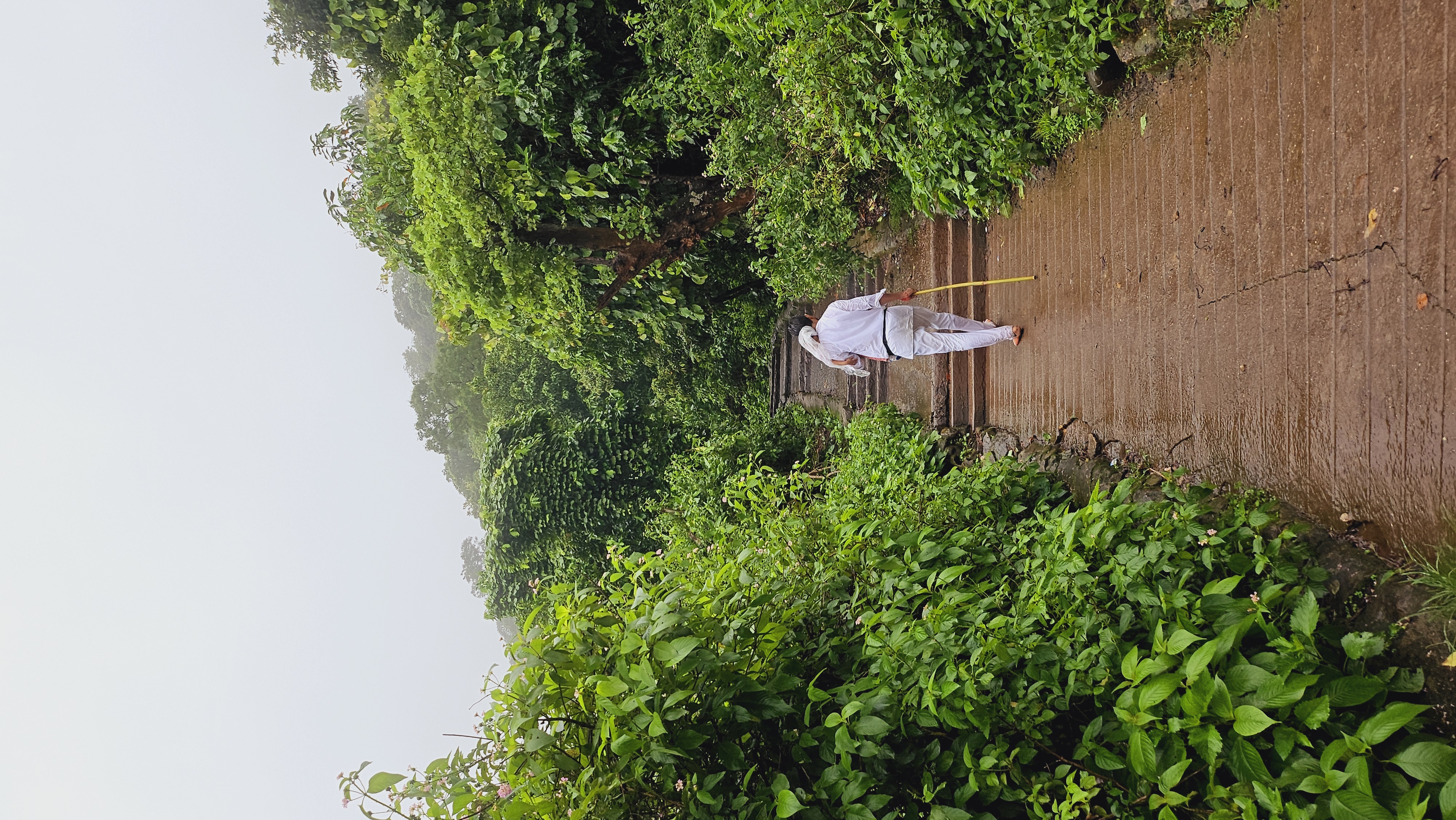
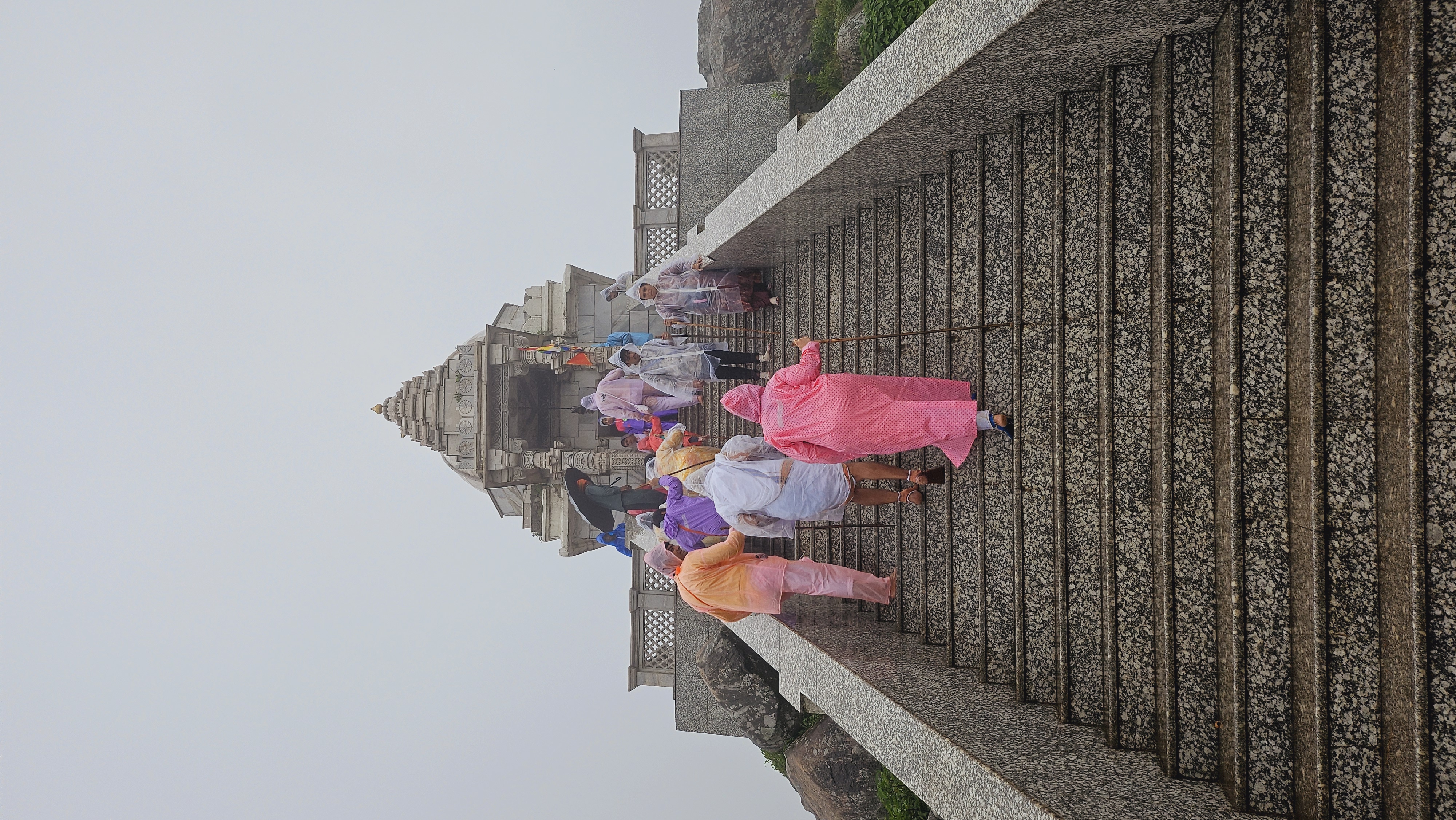
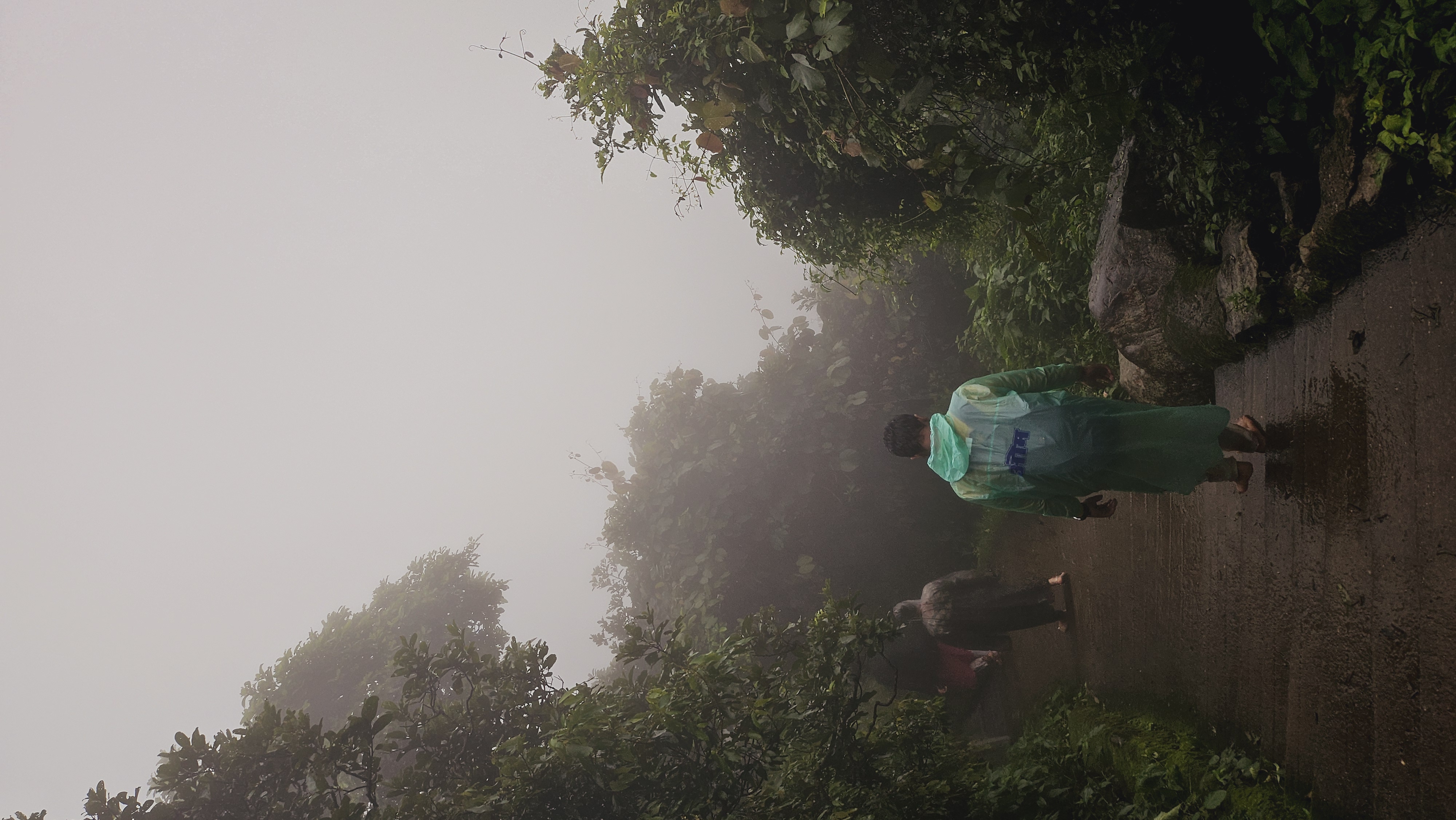
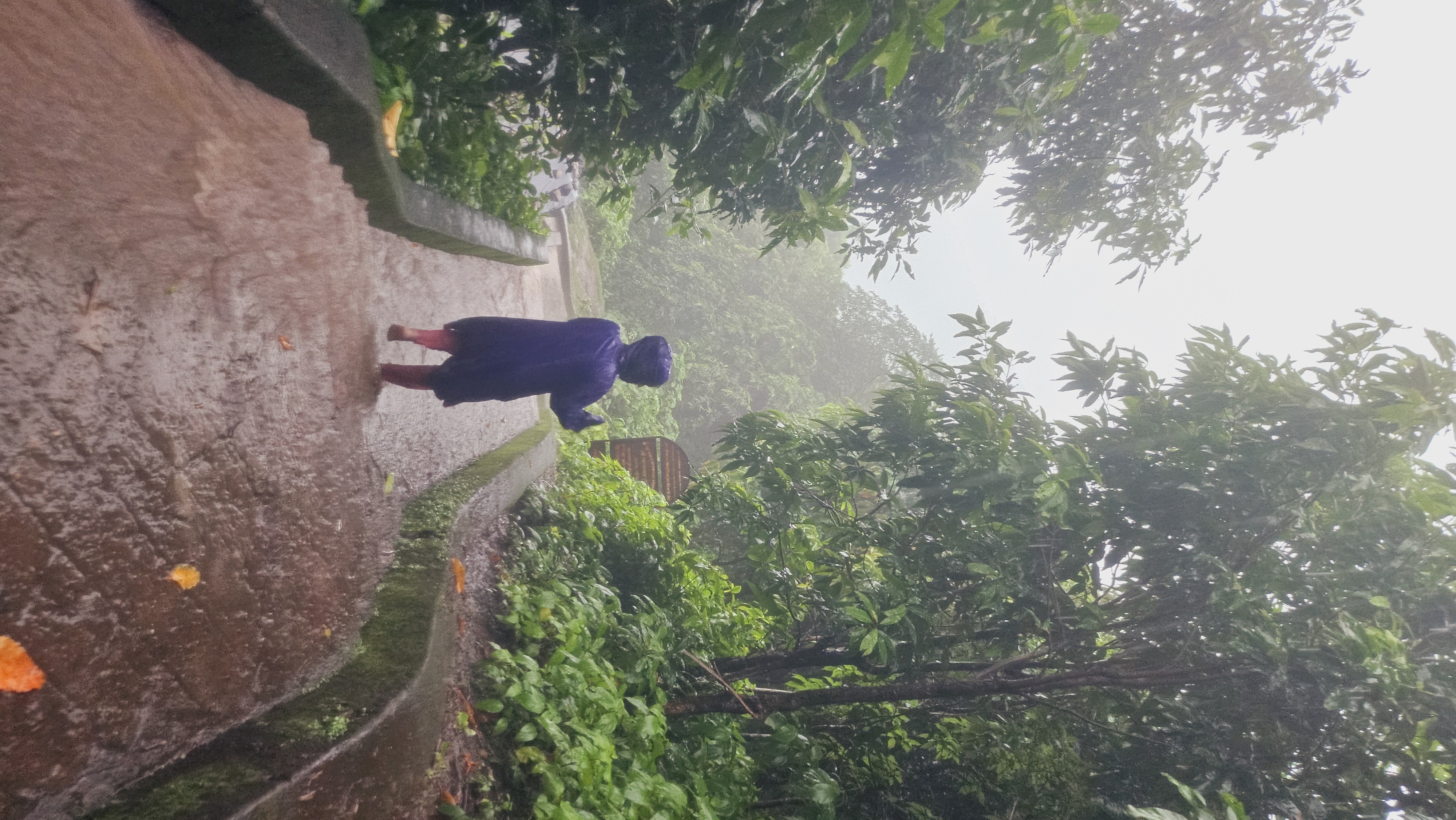
At 3 AM, we started our climb. It was pitch dark, surrounded by dense forest. Soon after, heavy rain began. We wore raincoats and moved ahead, step by step, through slippery paths.
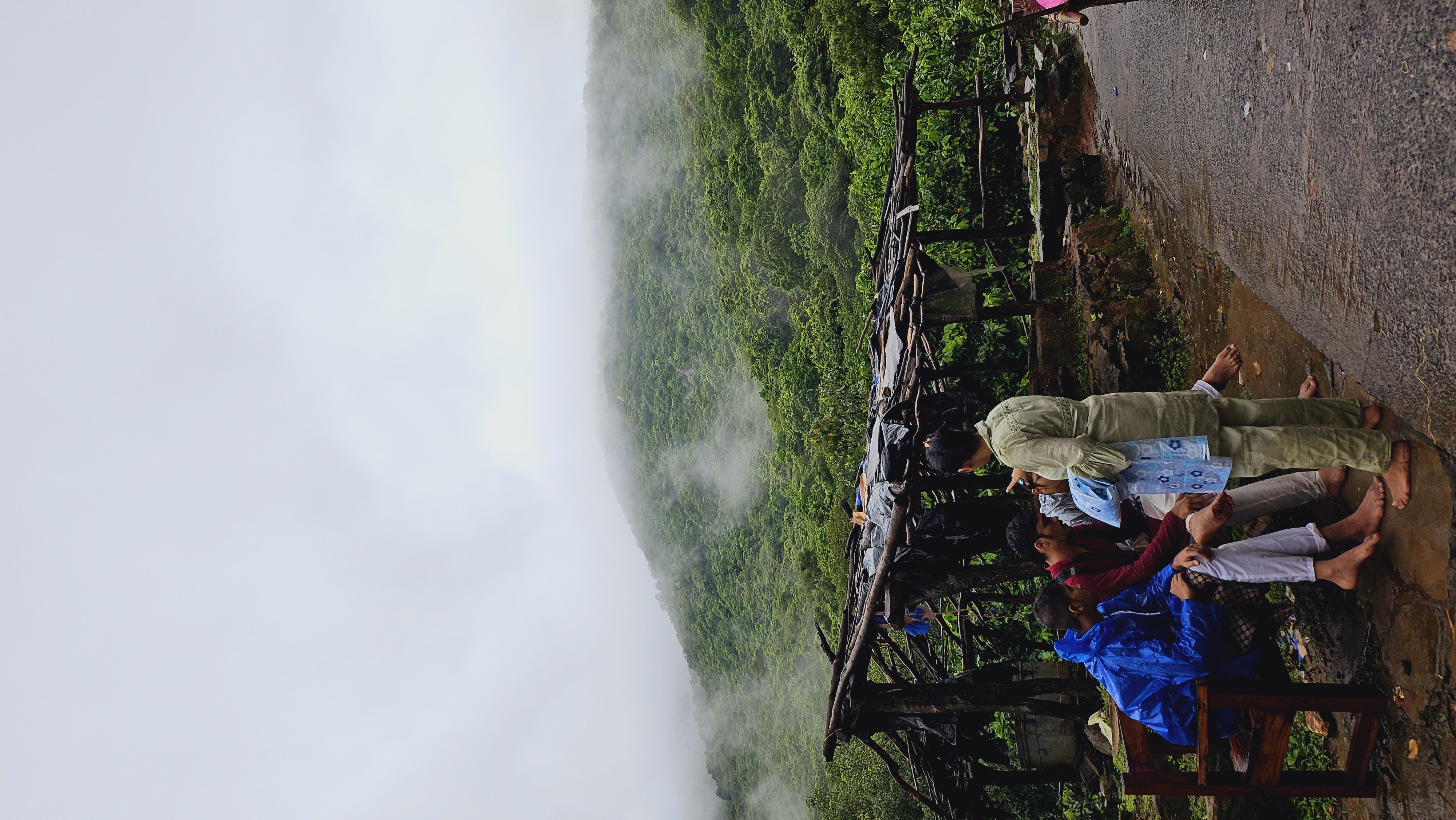
Sunrise came early here, but so did exhaustion. With varying walking speeds, our group split into fast and slow walkers (I am a fast walker) 😜. By 8:15 AM, the fast walkers reached the first tonk. The joy of walking 12–13 km in continuous rain was unmatched.
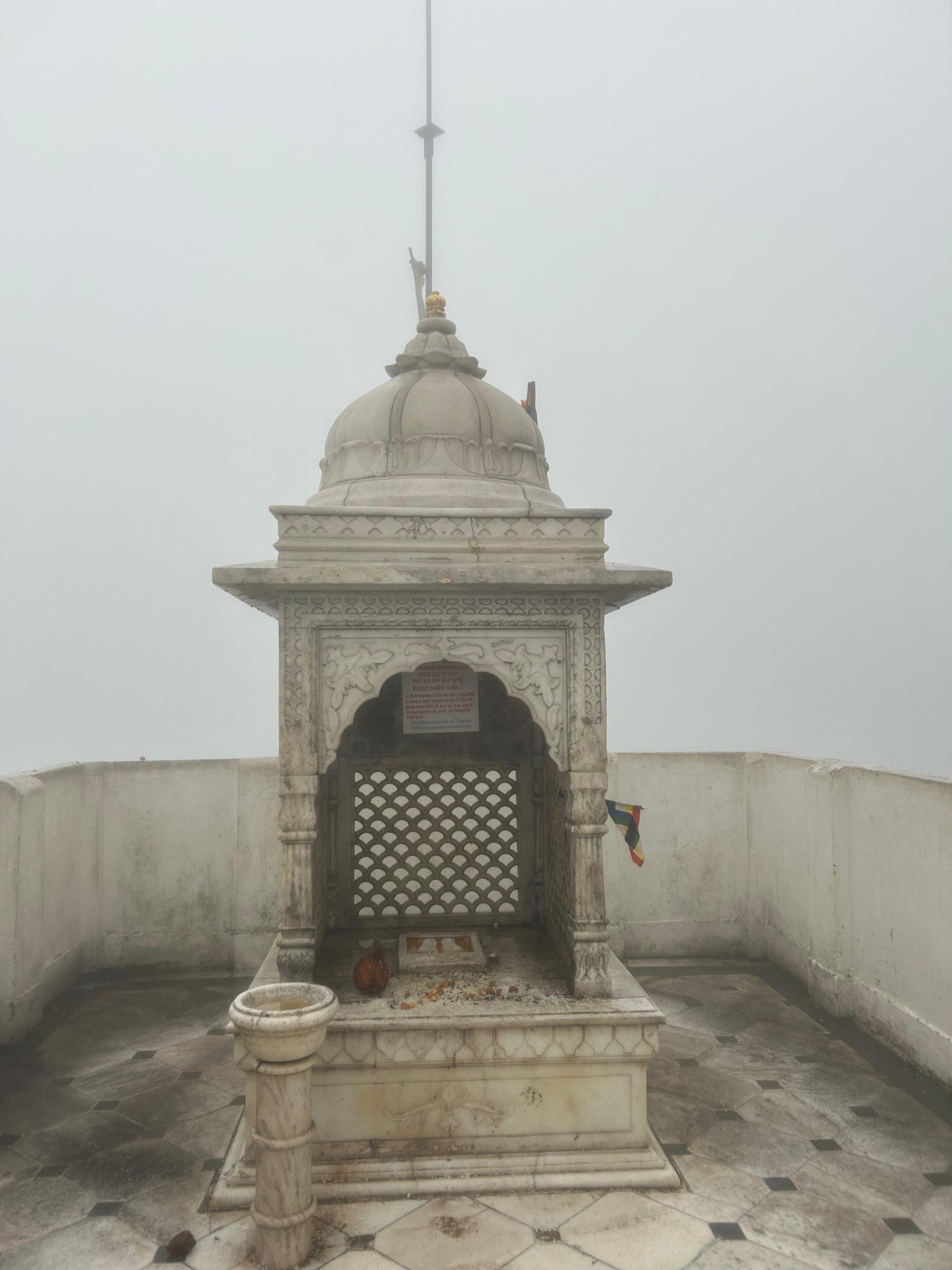
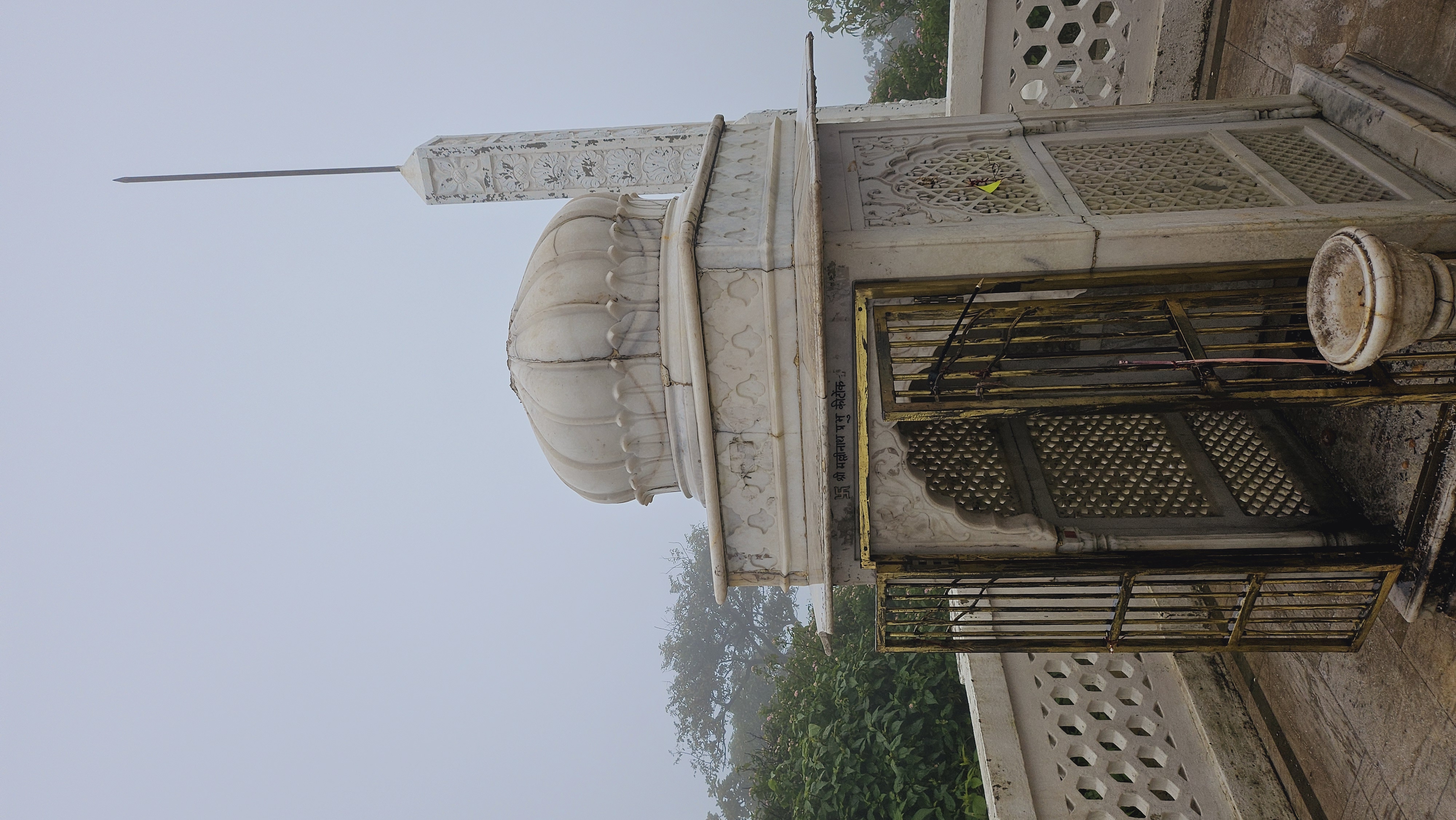
After regrouping, we began visiting tonks one by one, including the highest Chandraprabhu Tonk. The spiritual energy on touching those sacred places was beyond words.
The Jal Mandir Episode
At one point, the group again split with target to meet at Jal Mandir
But by then, heavy fog had engulfed the area, making even the person standing next to you barely visible. We called out loudly for Jinal, Sanket Bhai, and Payal Bhabhi, hoping for a response. After several anxious shouts, finally, their voices echoed back through the mist. Relief swept over us as the group reunited.
Inside Jal Mandir, with just our 11-member group present and no other visitors, we performed the pooja peacefully. The stillness of the temple, the sound of rain outside, and the sight of one of the 108 Parshwanath Bhagwan idols created an unforgettable, divine moment of bhakti.
By evening, we had covered 26 of 31 tonks in heavy rain. Exhausted but spiritually fulfilled, we returned to our dharmashala, where warm uttapa dinner awaited. That day, we had walked 35 km in 15 hours, non-stop, in the rain.
🕊️ 3rd August 2024 : Rujuwalika & Champapur
Next morning, we visited Rujuwalika – the place where Mahavir Swami attained Kevala Jnana (Omniscience) under the Shala tree near the Rijuvalika river. After pooja and meditation, we headed to Champapur (Bhagalpur), ending the day with evening arti and light conversations, nursing our tired legs from the Shikharji climb.
🌸 4th August 2024 : Five Kalyanaks and Sacred Birthplaces
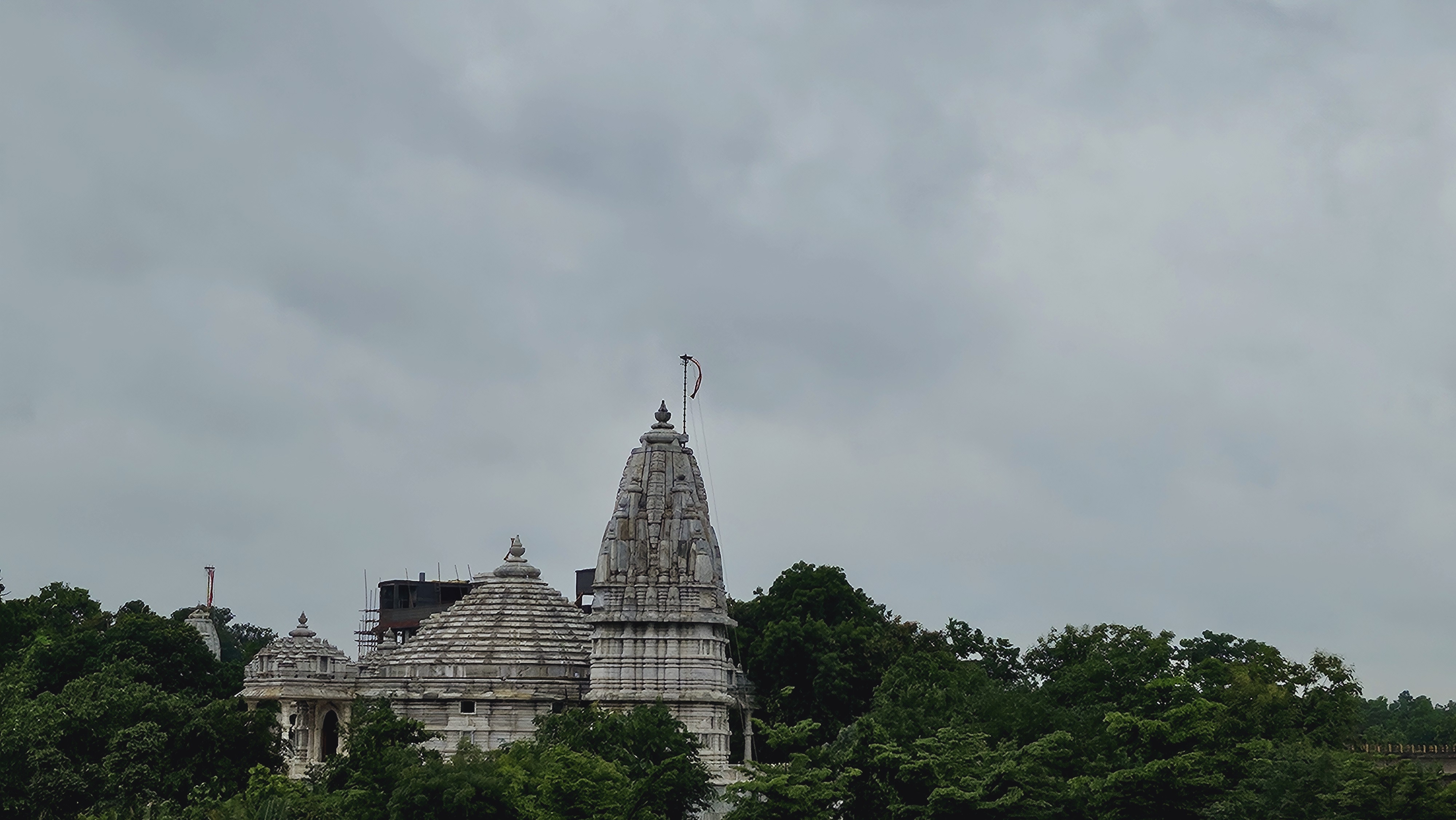
We woke up early, freshened up, and stepped into the silence of a temple where there was no one else except us. This rare solitude allowed us to perform pooja and bhakti of the 12th Tirthankara – Vasupujya Swami with complete focus and devotion.
Champapur is one of those rarest Jain tirths that has witnessed all five Kalyanaks (Chyavan, Janma, Diksha, Keval Jnan, and Moksha) of Vasupujya Swami. Standing there, we realized the spiritual magnitude of this place – it wasn’t just history; it was living divinity.
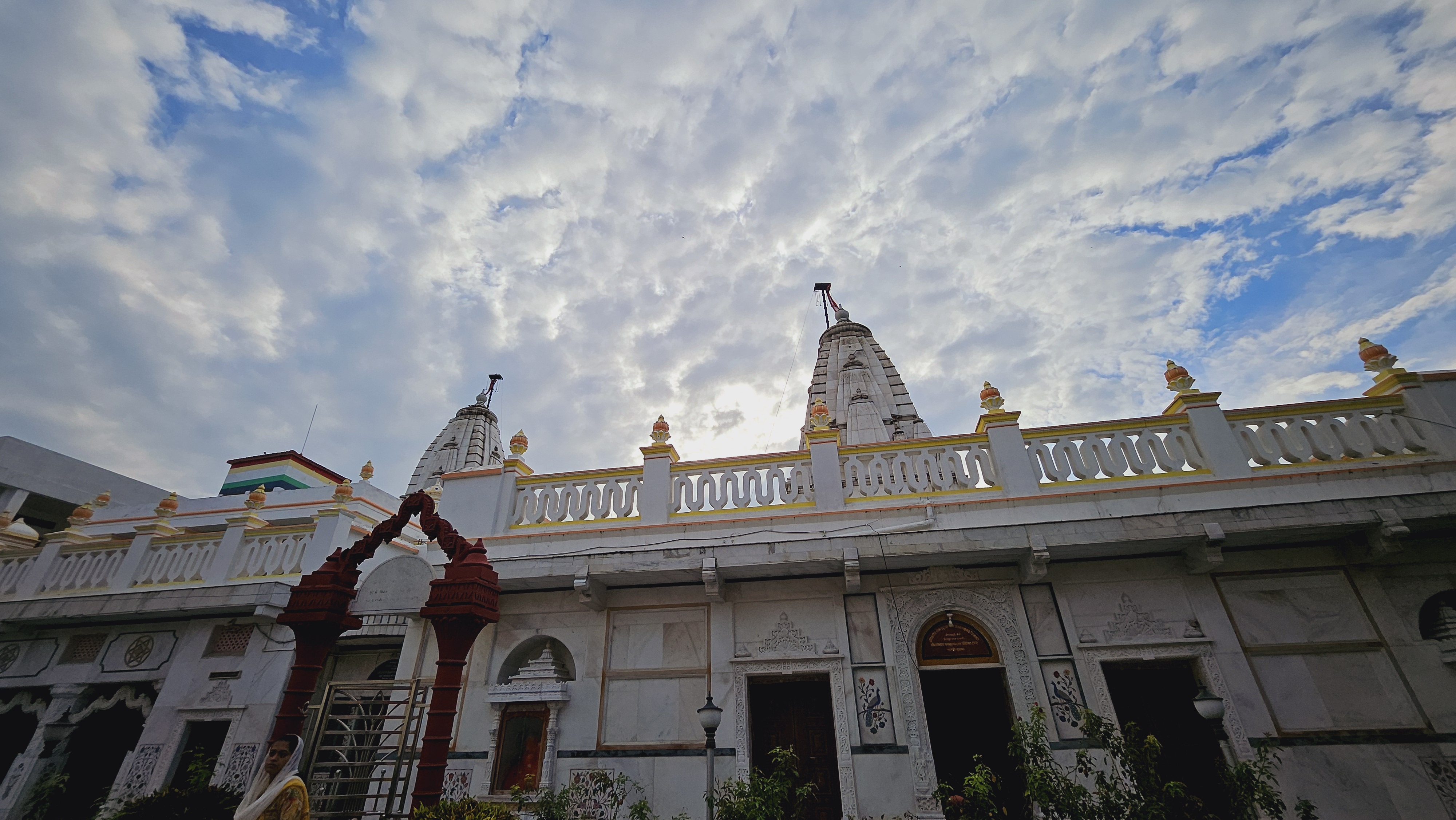
Among all spots, the underground Moksha Kalyanak temple left us spellbound. The meditative silence, soft fragrance of incense, and the feeling of being at the very spot where a Tirthankara attained eternal liberation felt like being in heaven itself.
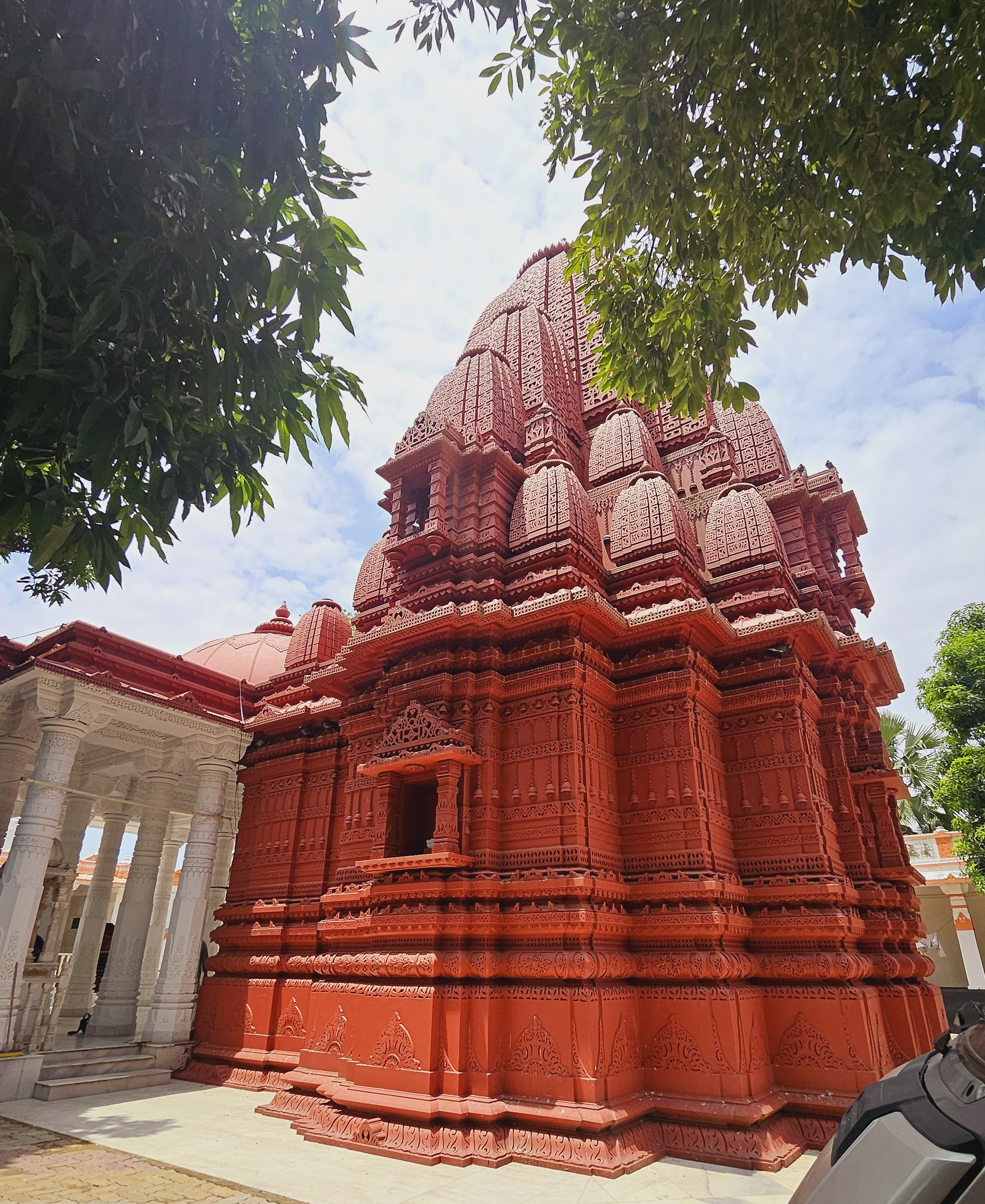
After breakfast, we departed for Kakandi, the sacred site of 9th Tirthankara – Suvidhinath Swami’s Chyavan and Janma Kalyanak. The temple here was breathtaking, adorned with intricate carvings that glowed under the soft morning light, giving it a surreal beauty.
From Kakandi, we proceeded to Shatriya Kund, where 24th Tirthankara – Mahavir Swami’s Chyavan and Janma Kalyanak took place. The climb to the Janma Kalyanak temple at the very top of Shatriya Kund hill was invigorating yet deeply humbling.
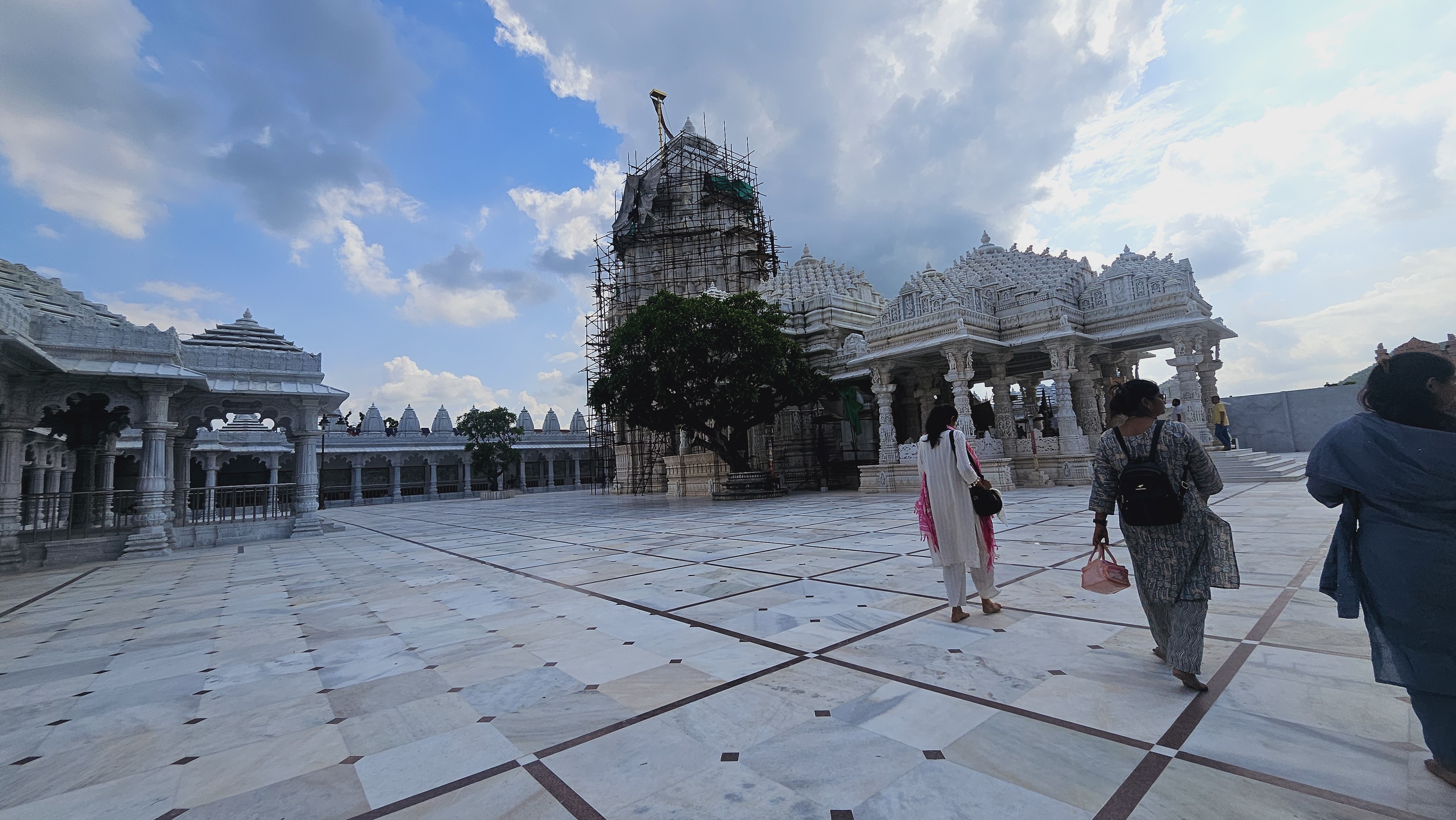
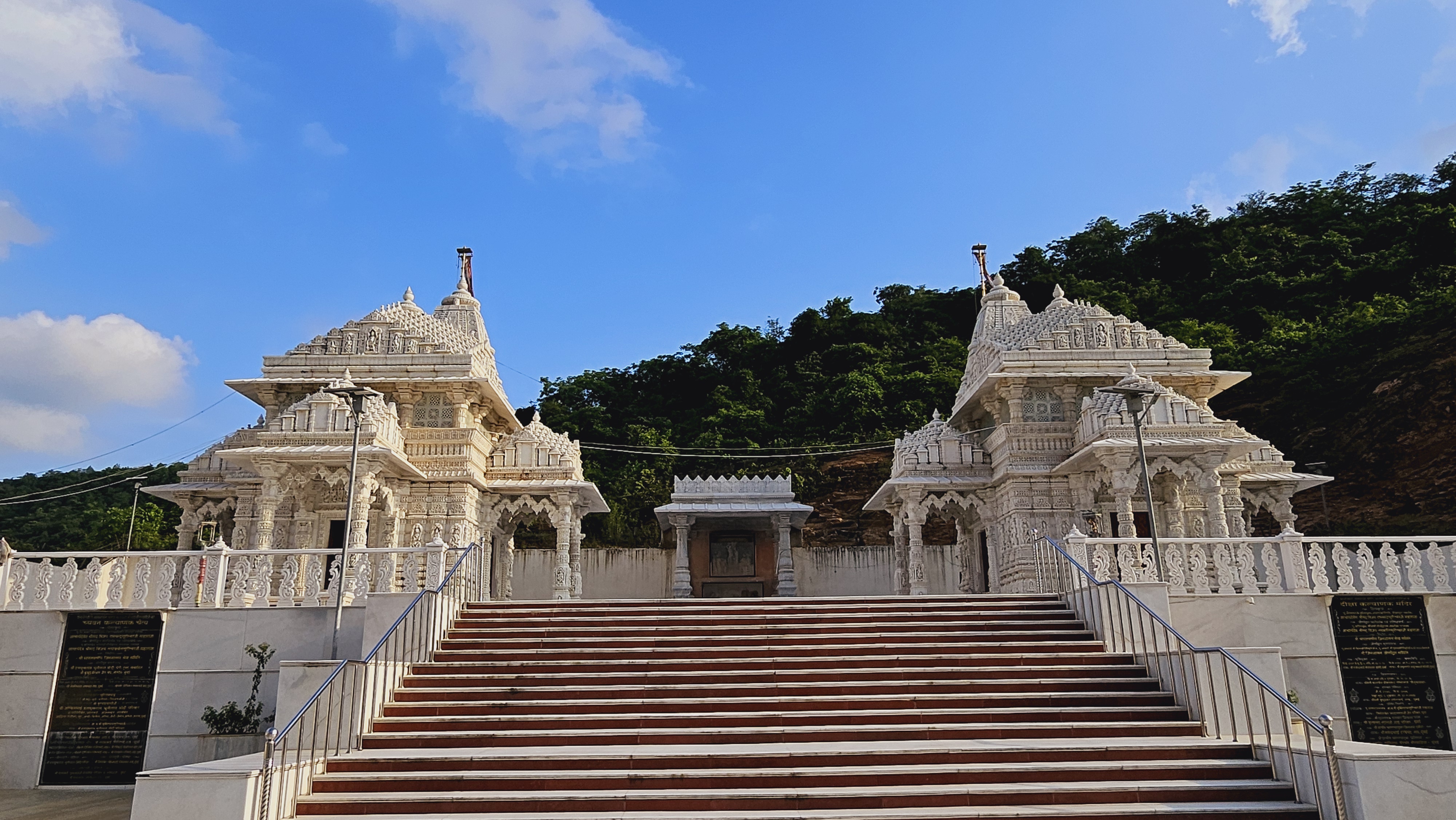
After performing pooja at both the Janma and Chyavan Kalyanak temples, we paused for a moment, looking around, trying to imagine:
Later, we proceeded to Lachhwad and had darshan followed by dinner. Lachhwad is the place where it is believed that Lord Mahavir spent his early childhood and also studied scriptures during his time at this location – walking through this land felt like stepping into history itself.
From there, we moved towards Guniyaji, the place where Gautam Swami, the chief disciple (Gandhar) of Lord Mahavir, attained Keval Jnana (omniscience). The calmness and spiritual aura of the place were overwhelming, leaving us all in silent admiration and gratitude.
With hearts full and minds peaceful, we headed towards Pawapuri for the night.
📚 5th August 2024 : Pawapuri & Nalanda
We began our day with pooja at the small yet serene temple in our dharmshala, preparing ourselves for what felt like one of the most spiritually significant moments of the yatra – visiting Pawapuri, the place where Lord Mahavir attained Nirvana (Moksha) in 527 BCE at the age of 72.
The main temple here, the Jal Mandir, sits like a lotus in the middle of a calm pond, connected to the land by a long white marble pathway. Its peaceful beauty is said to symbolize Mahavir’s eternal purity and liberation. After Lord Mahavir’s cremation, so many devotees took away soil and ashes as relics that a pond was formed at the site. Today, it stands as one of the most sacred places in Jainism.
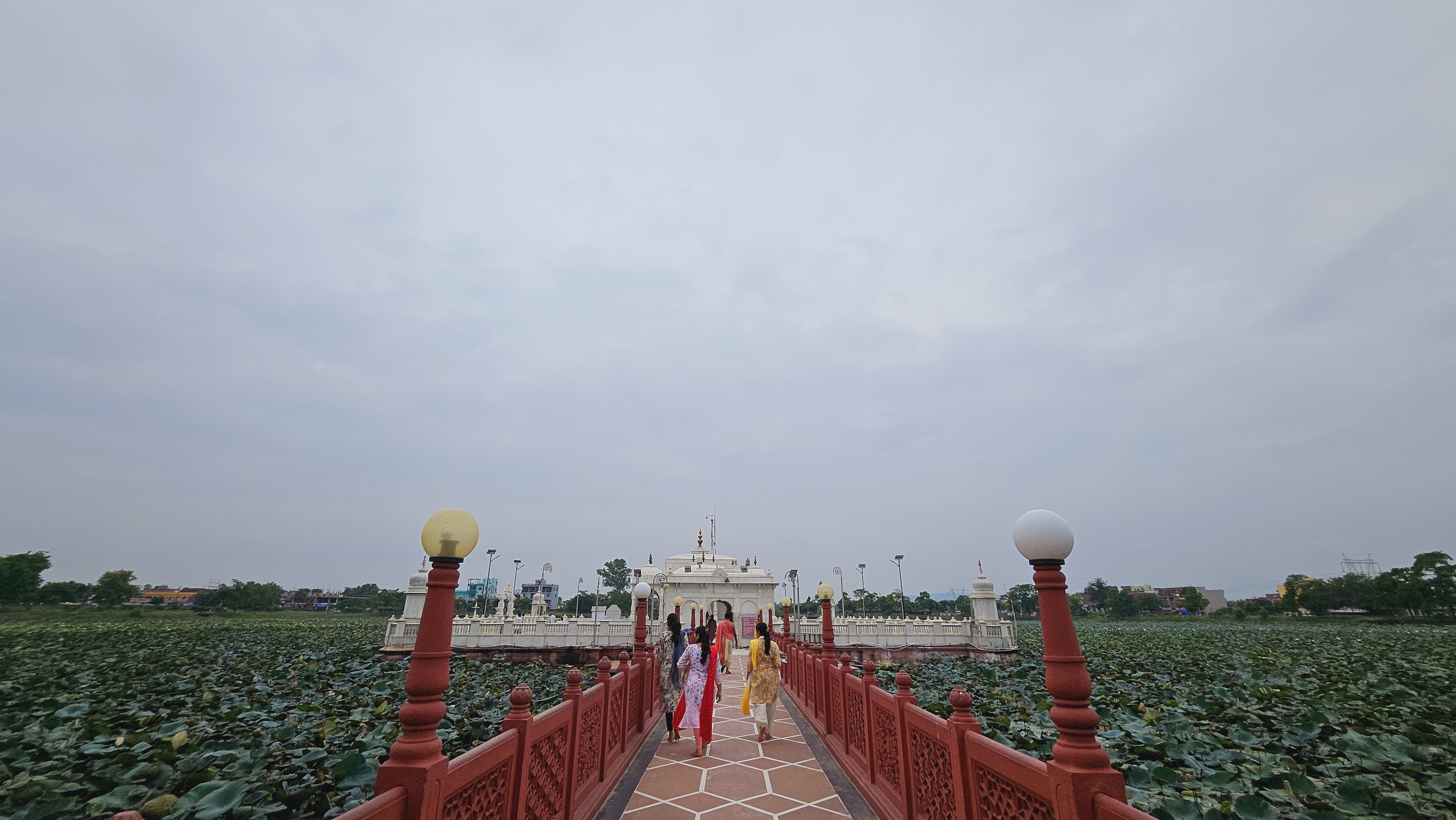
One of the most divine and mysterious phenomena associated with Pawapuri is that, on Diwali night, when Lord Mahavir attained Moksha, the Chatra (silver canopy) on Mahavir Swami’s Paduka (foot impression) rotates on its own. It is said that this happens due to the presence of celestial beings (devtas), a silent yet powerful sign that divinity still lingers here.
Standing there, praying and watching the reflection of the white temple shimmer in the water, a profound calmness touched all of us. It felt as though time had stopped, allowing us to experience a small glimpse of what Moksha might feel like – freedom, peace, and bliss.
From there, we headed to Nalanda, another place of immense historical significance. As soon as we entered the ancient monastery ruins, our eyes caught something unexpected – the name of our own hometown, Junnar, carved on one of the boards. We all looked at each other with excitement and pride; seeing “Junnar” inscribed at such a historically celebrated site was truly a “status-worthy Insta moment.”
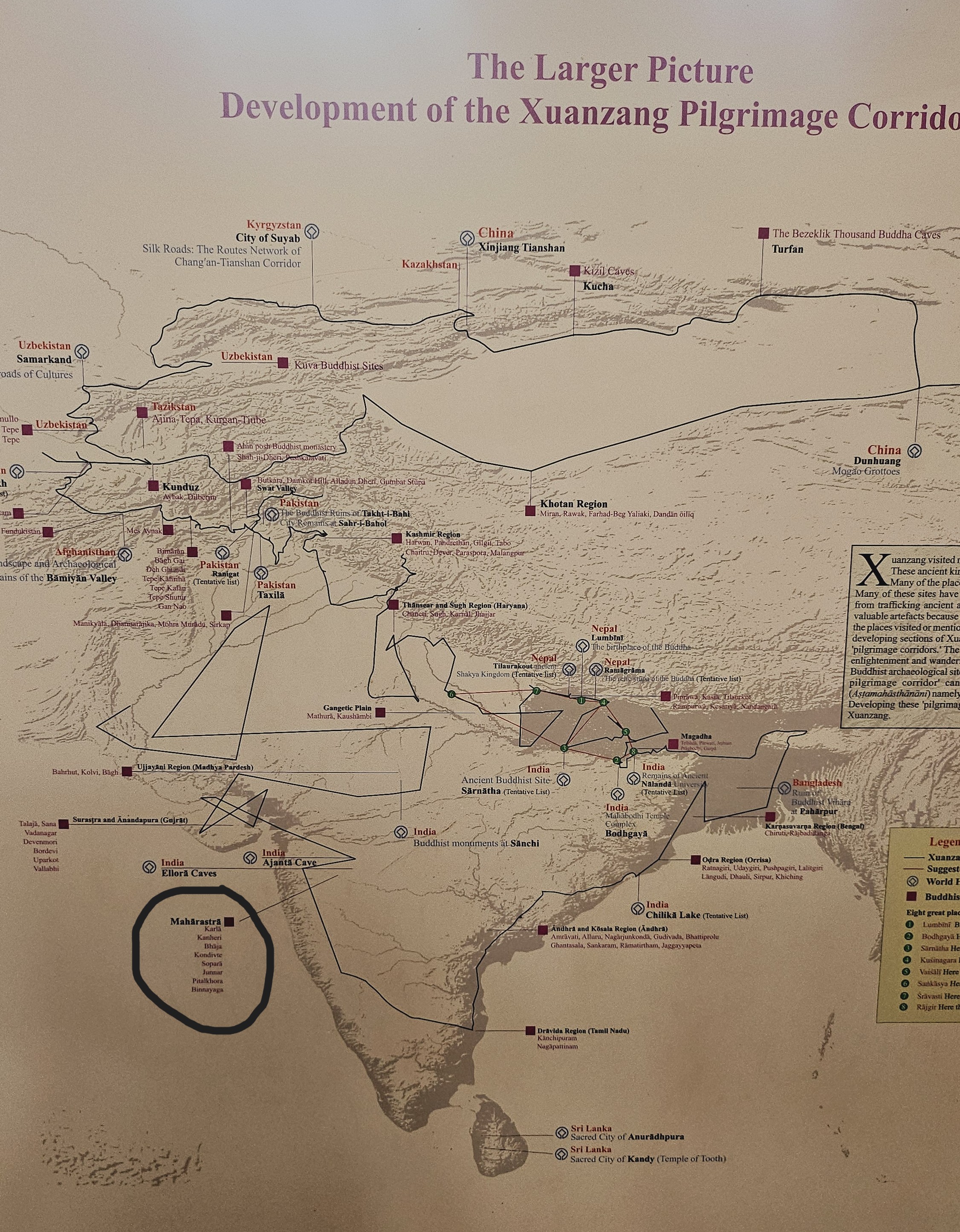
The remains of Nalanda University spoke volumes about its glorious past. Established in the 5th Century CE during the Gupta Empire, it once attracted scholars from all over the world. It thrived under rulers like Harshavardhana (7th century) and the Pala dynasty (8th–12th century), housing thousands of students and teachers who delved into philosophy, medicine, mathematics, astronomy, and much more. Unfortunately, it was destroyed in 1193 CE by Bakhtiyar Khilji, leading to one of history’s greatest intellectual losses.
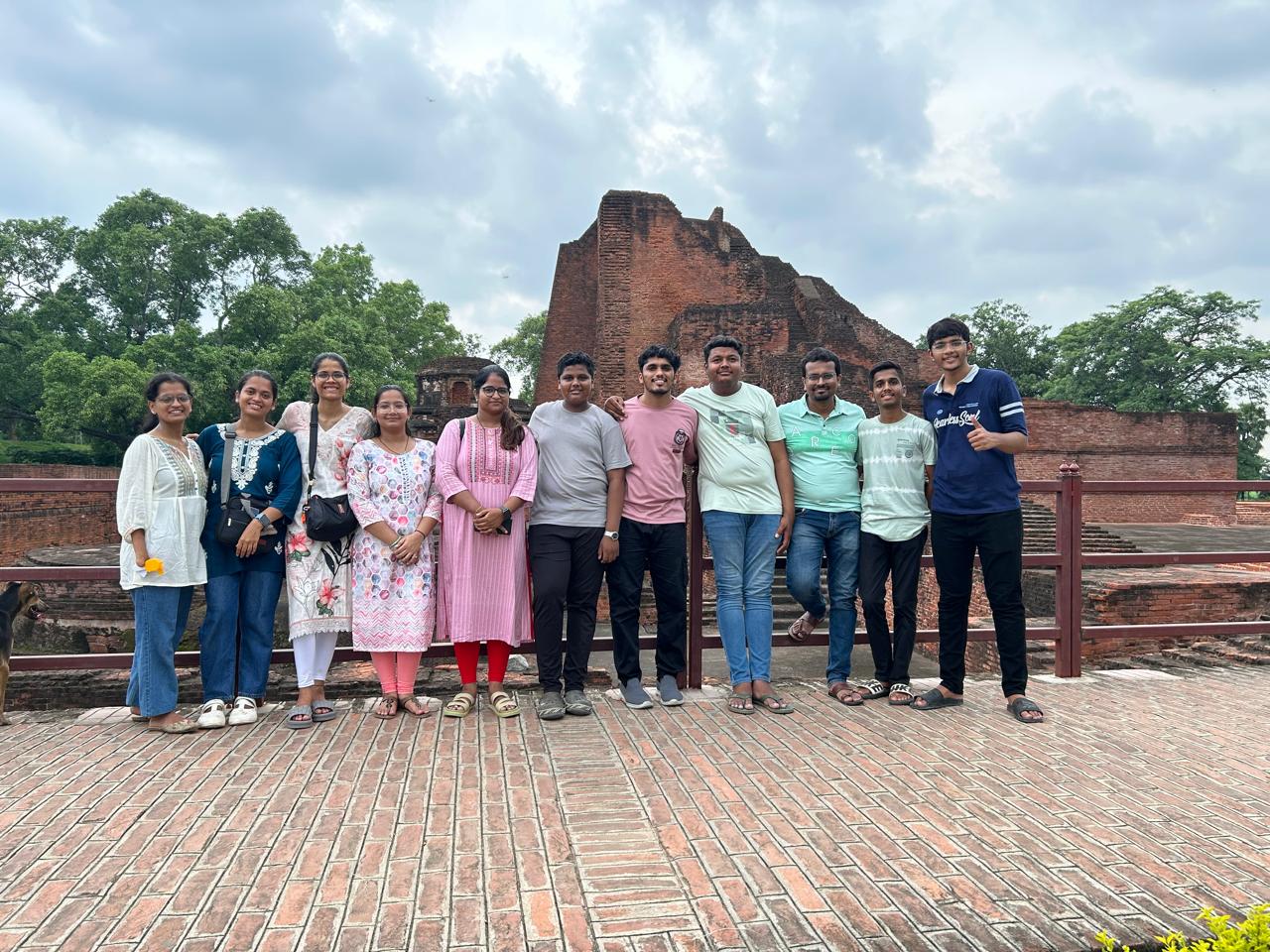
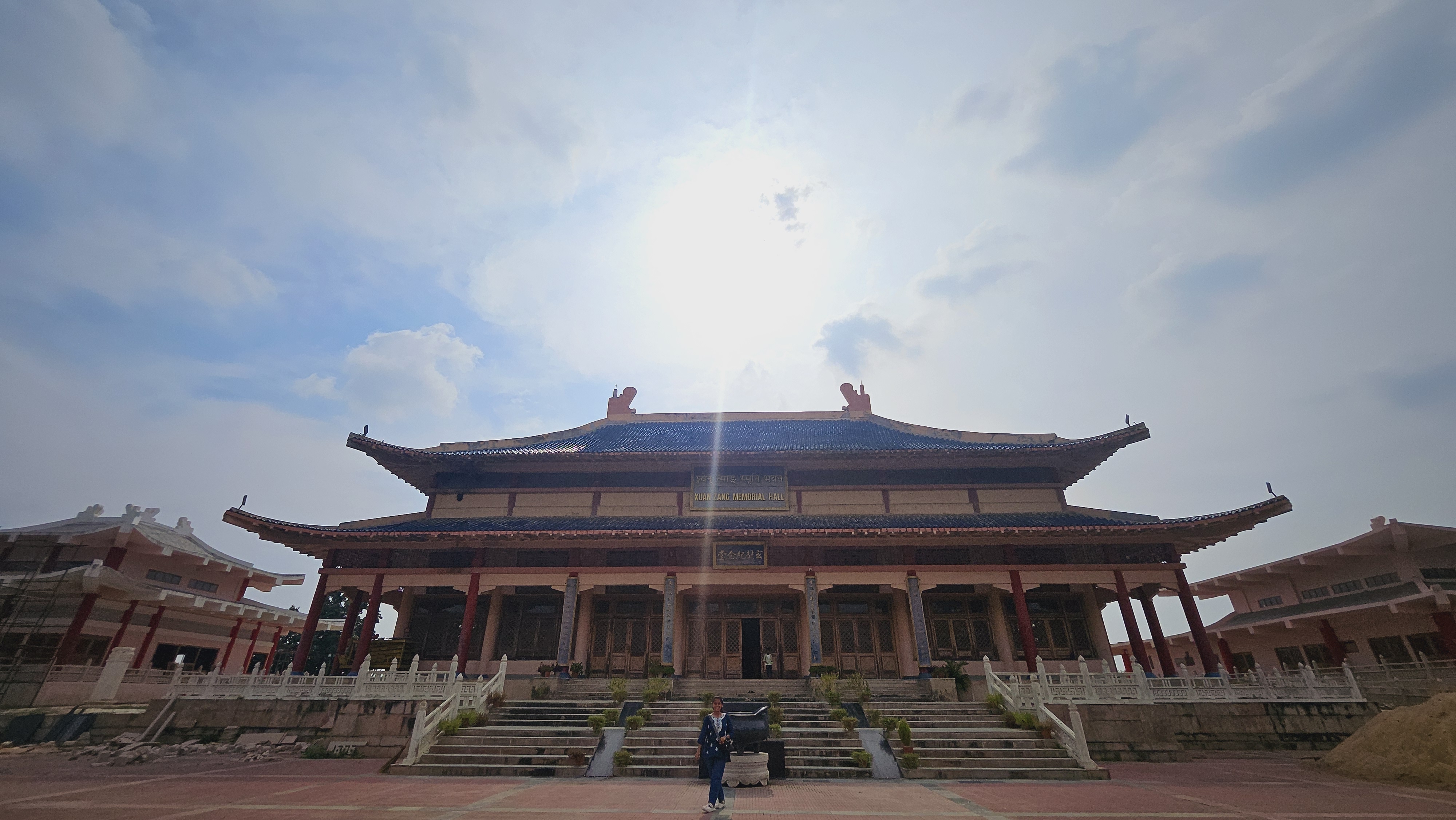
Yet, history has a way of finding new beginnings. Nalanda has been re-established in 2010 as an international university, once again becoming a center of knowledge and learning. Walking through its ancient red-brick ruins and reading about its revival gave us goosebumps – it felt like being a part of a circle of knowledge spanning centuries.
After soaking in the spiritual and historical energy of the day, we finally reached Rajgruhi, had a simple dinner, and rested for the night, preparing for another day of exploring sacred paths.
🏞️ 6th August 2024 : Vaibhagiri & Virasat Museum
The morning greeted us with a calm sky, but little did we know what awaited us. After our breakfast and morning pooja, we headed towards Vaibhagiri, one of the five sacred hills of Rajgruhi, revered for its deep association with Lord Mahavir Swami’s spiritual practices. This hill is also famous as the place where Shalibhadra – often compared to a modern-day billionaire like Ambani – renounced immense wealth and ultimately attained Moksha (liberation).
The climb was no easy task – nearly 500 steep steps stood between us and the summit. As we began ascending, the weather took an unexpected turn, and heavy rain poured down. With no raincoats or extra pairs of clothes, there was no turning back; instead, we embraced the rain as part of our journey. The steps became slippery, and the surrounding hills echoed with the sound of rainfall. Yet, every step felt like a meditation – a reminder that reaching any sacred place often requires overcoming challenges, both physical and mental.
Unfortunately, due to the relentless downpour and the fog that enveloped the top, we could not visit the exact spot where Shalibhadra attained Moksha. There was, however, a deep sense of fulfillment in simply touching the sacred land where this great soul once walked, meditated, and liberated himself from the cycle of life and death.
After completing our pooja at Vaibhagiri, drenched yet elated, we descended and returned to our dharmshala to freshen up.
Our next destination was the Veerayatan Jain Museum, also known as Kala Mandir, which houses 50+ 3D dioramas depicting the lives of the 24 Tirthankaras.
And just when we thought the day couldn’t surprise us further, we visited the Glass Bridge. Imagine standing on a transparent walkway suspended above nature, with lush mountains and green valleys stretching below your feet – it was an exhilarating experience! The view was breathtaking and a reminder of how beautiful and grand nature can be when seen from such unique vantage points.
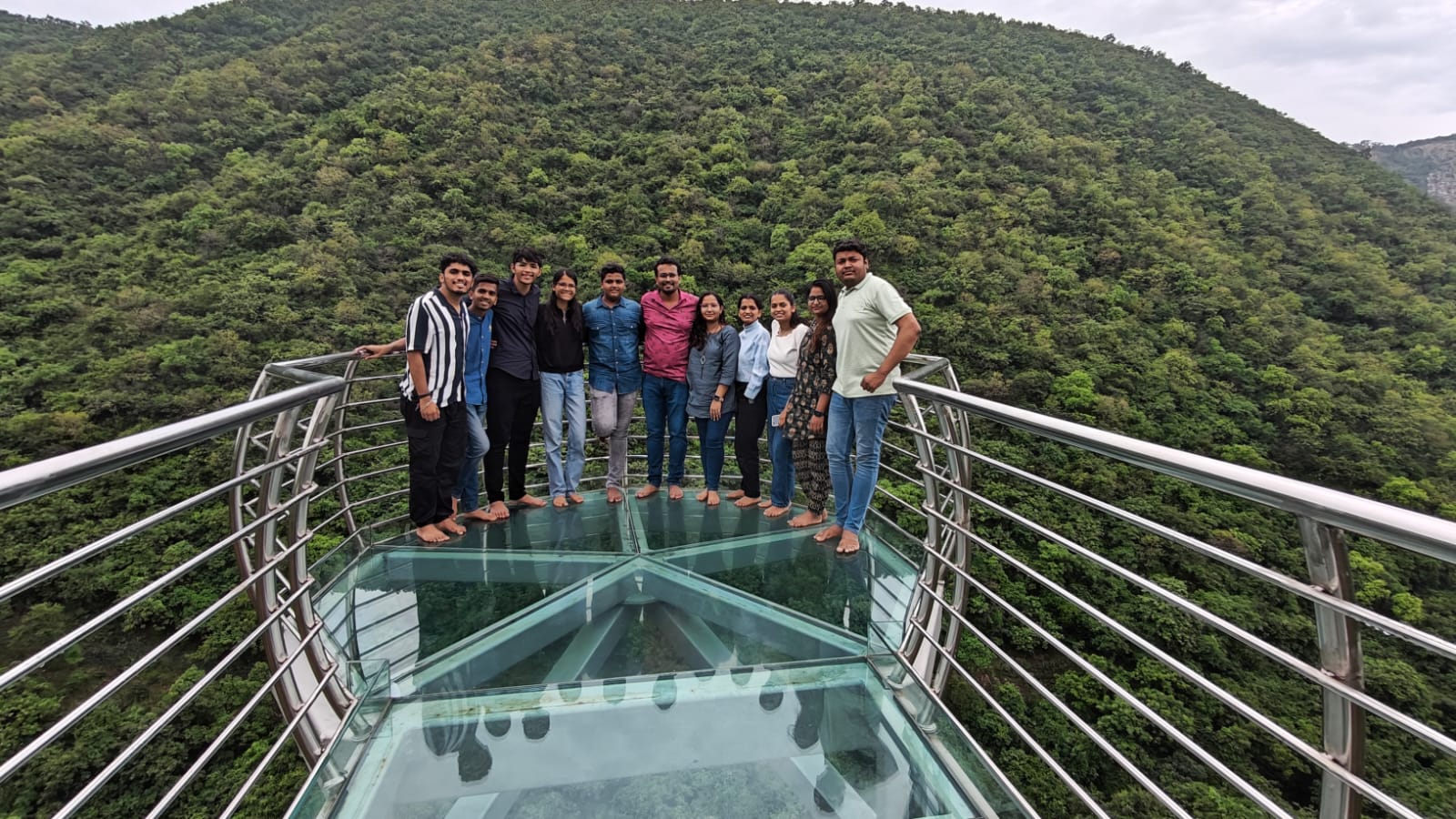
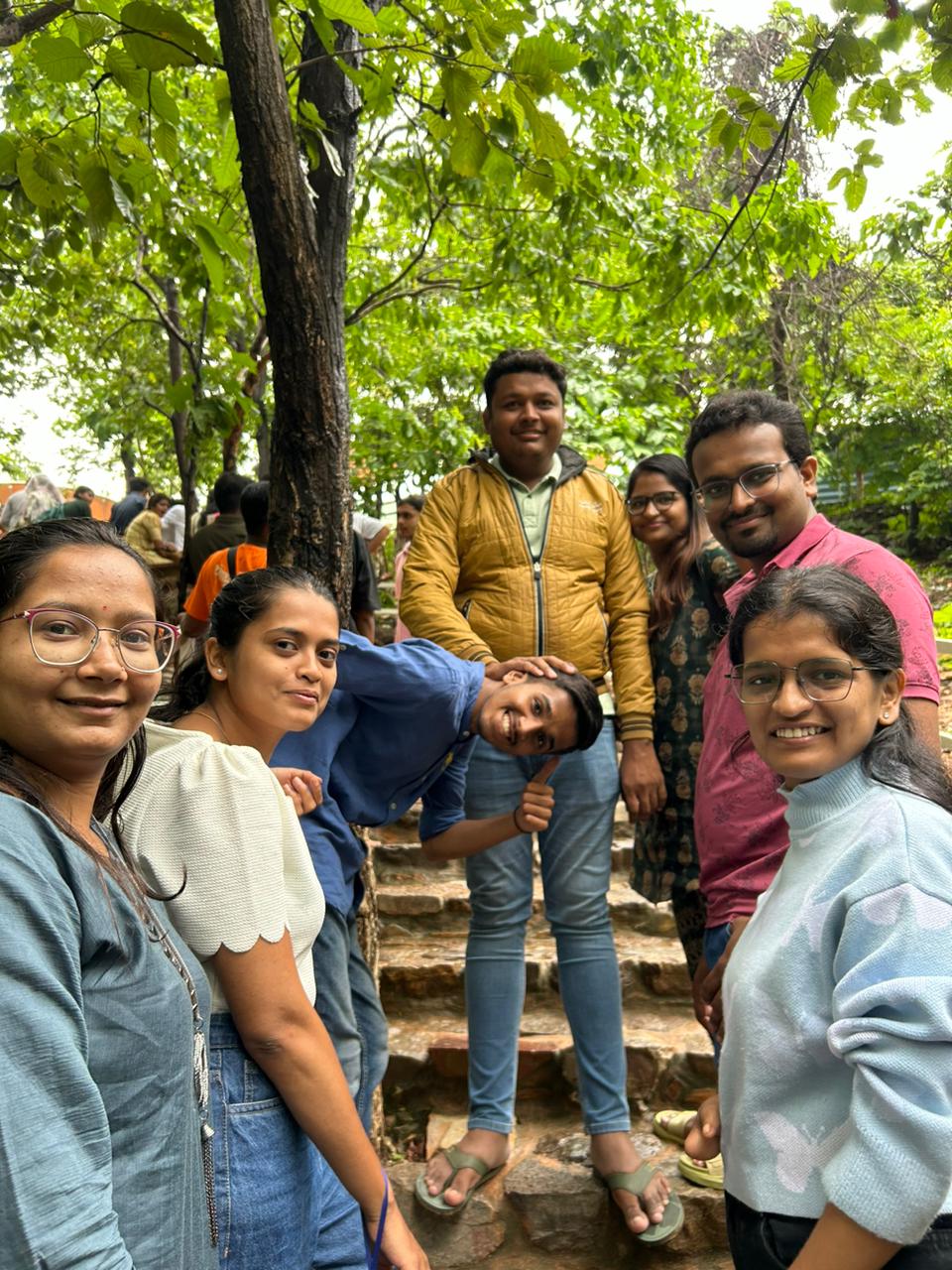
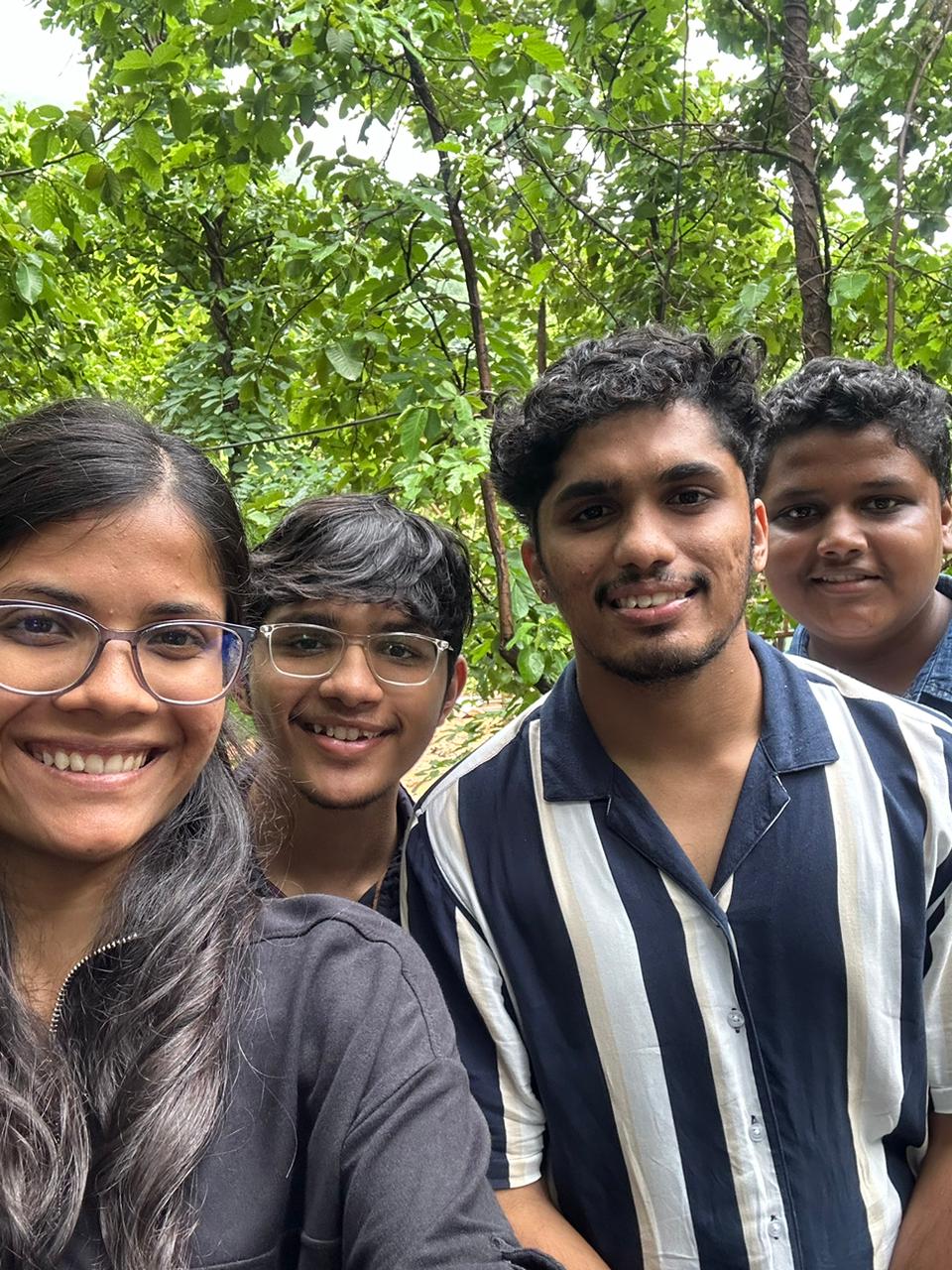
With hearts full of gratitude and phones full of photos, we headed towards Gaya, looking forward to the final chapters of our yatra.
🙏 7th–8th August 2024 : Return Journey
The yatra ended with hearts full of gratitude and memories etched for life. From the tough climb of Shikharji in the relentless rain to the serene Jal Mandir of Pawapuri, from ancient Nalanda’s wisdom to the spiritual heights of Vaibhagiri and the peaceful aura of Guniyaji, it was a journey of body, mind, and soul.
Even getting vegetarian food is tough in Bihar, but getting home-like food in dharmashalas is surprisingly easier than in any other state – a blessing for every Jain yatra traveler!
We boarded the train back, our souls content, our minds calm, and our hearts promising to come back again when “Dada ka Bulava Aayega…”
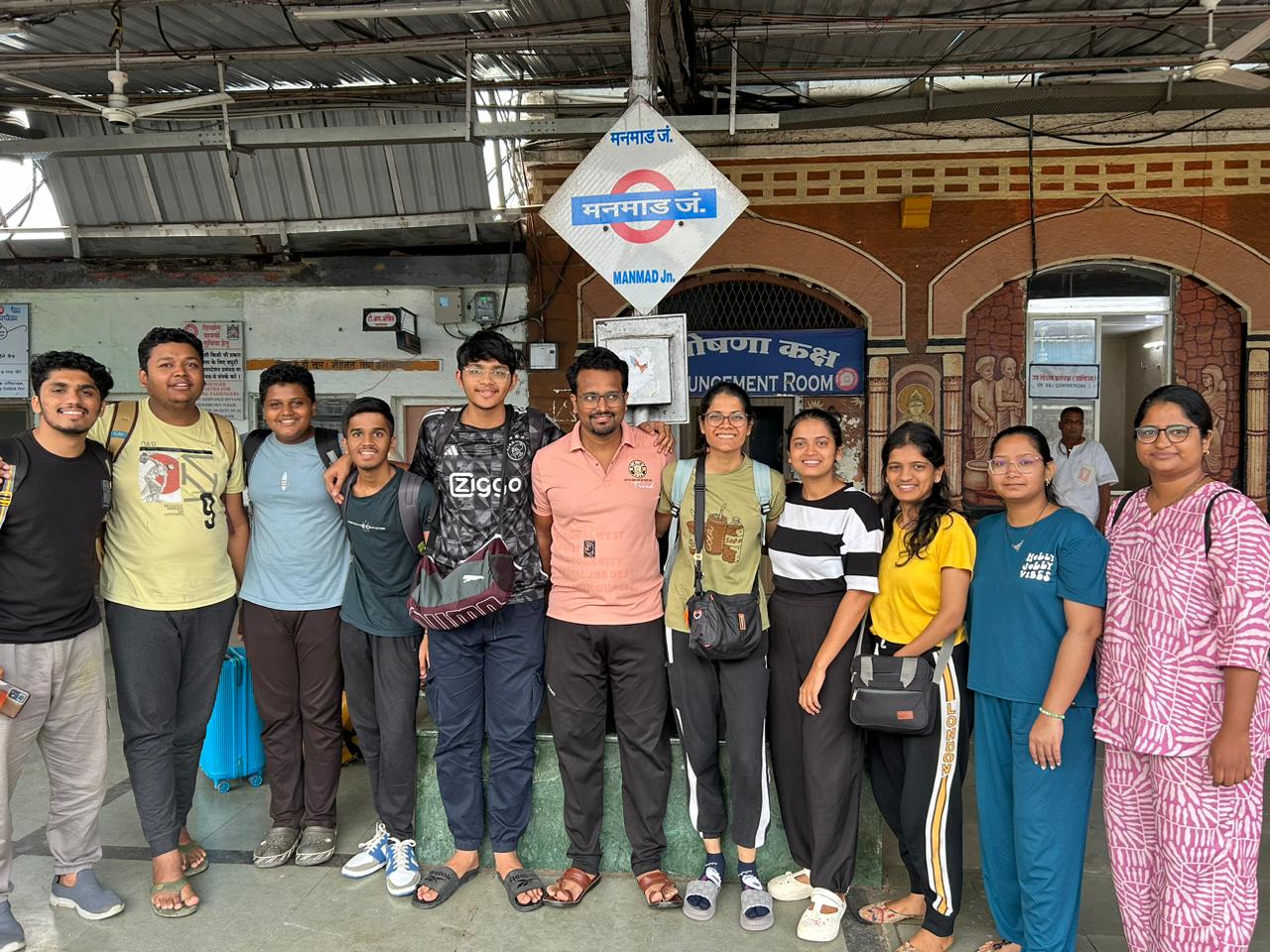
Back in Yeola, Sanket Bhai surprised us with food items my sister had long wanted to take on the yatra. With warm hearts and tired legs, we finally returned to Junnar, completing one of the most spiritual experiences of our lives.